SEO - Search Engine Optimization
Technical SEO is never finished, and any release can break it. We build indexing, hreflang, Core Web Vitals, 301 mapping and measurement as one system.
Technical SEO is never finished in one pass. A site can be built correctly on the day it launches, and three months later a filter generates thousands of URLs, a language version ships with an incomplete declaration, and what the search engine sees has quietly changed. So we do not call the work "improving rankings": we build the system that produces rankings and measure whether each release breaks it. The system has three conditions: the search engine crawls the site fully and indexes the right page, the pages sit in an architecture that supports each other, and the effect of every change is traceable in data. Most claims on this page are open on bebekistiyorum.com and on the detartech.com site you are reading.
We define SEO in three layers
For us SEO is the work on a site's technical structure, URL architecture and content layout that increases traffic from search results. It has three layers. Access: can Googlebot fetch the page, which page does it index, which URL does it treat as canonical. Meaning: which question does the page answer, and do the headings and internal links say so. Measurement: which page appears for which query, and whether that appearance turns into business. Things we do not do: buying links, building networks of sites, redirecting expired domains, duplicating the same text with the city name swapped. They can produce numbers briefly, but they are the first items to fall in an algorithm update.
The six pieces of work in an SEO engagement
The six headings below define the scope of an SEO engagement. The order is not arbitrary: content work does not pay off until access problems are solved. The third heading applies only to multilingual sites, the fifth only to sites being moved.
Technical audit: indexing, crawl budget and redirects
A technical audit answers three questions: which pages are indexed, meaning kept in the search engine's own catalog, which should not have been, and why pages that should be indexed are missing. The distinction that breaks most often: blocking a URL in robots.txt is not the same as a noindex tag, because a blocked page is never fetched, so its noindex tag is never read. On crawl budget, meaning the number of pages a search engine's bot is willing to fetch from your site in a given period, the pattern we find most often is URL multiplication from filter and sort parameters: while one listing sits at dozens of addresses, the crawler reaches the real pages late. On redirects we unwind chains and loops: a two-step redirect looks like it works but adds a needless hop to every click. Its output is a written list reading a Screaming Frog crawl, server logs and the Google Search Console coverage report together.
Content architecture and internal linking
Content architecture decides which topic is covered on which page and how those pages link to each other. The problem we correct most often is pages competing: when three answer the same question, the search engine cannot decide which to show and all three stay weak. The fix is usually not new content but merging them into one page and redirecting the other two to it. On internal linking the test is simple: how many links point to a page from inside the site, and does their anchor text say what it is about. A page nothing links to is not prioritised, even if the sitemap lists it. We pull the external link profile with Ahrefs and the internal distribution with Screaming Frog, and read both in one table.
hreflang management for multilingual publishing
hreflang is the tag that declares the language versions of one piece of content to a search engine as counterparts. Three rules are non-negotiable. The link has to be reciprocal: if the Turkish page points at the Russian version, the Russian page has to point back, because a one-way declaration is ignored. Every cluster has to include its own URL, and the URL it points to has to be the indexable canonical version, since hreflang on a redirected or noindexed address invalidates the cluster. It breaks most often on a translation gap: when one language leaves publication, the cluster quietly falls apart. So we build hreflang not as a hand-written list but as an output generated from the live page records. On bebekistiyorum.com the four language versions are declared to search engines with hreflang tags.
Core Web Vitals and page experience
Core Web Vitals are the three field metrics Google uses for page experience: how long the largest content element takes to paint, the delay between an interaction and the next paint, and the accumulation of layout shift. On the SEO side we clarify two things up front. First, where the data comes from: the assessment looks at field data from the browsers of real visitors, not a lab score taken on one device, so we report from the Core Web Vitals report in Search Console. Second, the limit of the effect: these metrics separate two results of similar strength, they do not carry a barely relevant page to the top. The set that breaks them is narrow: images without declared dimensions, late-loading fonts, an oversized JavaScript bundle and third-party code added after launch. How these metrics relate to architecture is on our web development page.
Migration and 301 mapping
A migration means the URL structure changes: a new platform, a new domain or a new information architecture. The search engine value accumulated over years sits in the address rather than the page, so an old address left without a counterpart takes the value with it. The map is produced in this order: old addresses are collected from the sitemap, server logs and Search Console, each is mapped to a single counterpart in the new structure, and the mapping goes live as a permanent redirect. Redirecting everything to the home page is not a mapping. On bebekistiyorum.com, more than 1,200 addresses from the old ASP.NET site were mapped to the new information architecture and preserved with a database-driven 301 redirect layer.
Measurement and reporting
Measurement comes from three separate sources that should not be mixed. First, the site's own search data: Google Search Console reports, from Google's record, which page was shown for which query, how many clicks it took and its average position; index coverage and crawl statistics sit there too. Second, third-party tools: Ahrefs and its peers give the external link profile and competitor comparison, but their ranking figures are a sample, and because the results page changes with location and device, what we measure is a repeated trend rather than an absolute position. Third, your side: whether an organic session filled in the form. The report gives all three in one table with the changes that shipped in that period.
What we protect during a migration
When a site moves, rankings are not the only thing at risk; six items come under threat at once. Addresses: each old one is mapped to a counterpart and goes live as a permanent redirect. Internal links: links on the new site point straight at the new address, not at the redirected old one. Language clusters: hreflang links are rebuilt with the new addresses, since a cluster pointing at an old one is invalid. Structured data: JSON-LD markup is regenerated in the new templates, since it does not travel on its own. Sitemap: only indexable canonical addresses remain in the new one. Advertising and measurement: landing pages and conversion tags for paid campaigns are updated, because a working redirect rescues the click but not the measurement. In the bebekistiyorum.com rebuild, Google Ads conversion tracking was integrated into the appointment and contact forms. The first weeks after launch are a monitoring period: the coverage report, 404s in server logs and new redirect chains are read regularly.
How we build SEO and GEO together
Classic search and answer-generating systems look at the same site with two different questions: Google wants a page to rank, while systems like ChatGPT, Perplexity and AI Overviews want a source to put inside their answer. The common ground is wide: crawlability, correct HTML, a clean sitemap, page speed and content carrying real information are preconditions on both sides. The divergence starts with the unit of work: SEO optimises the page, GEO optimises a single passage. In practice the text under one heading has to do two things at once: state what the page is about, and stay complete when lifted off the page on its own. On sequence our position is firm: access and indexing breakage is cleared before any GEO work begins, because the files produced there rest on the same crawler access. Work aimed at ending up inside answer-engine citations is a separate offering, set out on our GEO page, with the technical detail in our GEO guide.
The timeline of results
Indexing moves comparatively fast: a new page can be crawled and added to the index within days. Ranking moves at a different pace, because the results page varies by location, device and search history; on a competitive query, a change in position depends on the site's history and on what competitors are doing. We cannot control algorithm updates themselves, but after one ships we separate, with data, which page group was affected and how, and prioritise fixes accordingly. Technical work alone does not create demand either; being first for a term nobody searches brings no business, which is why we build the target query list together and read the report as a trend rather than an absolute rank.
How an SEO engagement runs
An SEO engagement opens with an inventory of how the site currently looks to a search engine: index coverage, crawl logs, redirect structure, hreflang clusters, field data for page speed, and the queries that will be measured. That inventory becomes a written priority order setting the cost of each fix beside its expected effect. The second stage is implementation: redirect rules, template fixes and markup are written straight into the project's own codebase. The third stage is regular follow-up: indexability, redirect and hreflang checks are repeated after every release, because a new page type or a template change can break them. When the contract ends the redirect map, the markup, the target query list and the check list are already in place; there is no dashboard to close.
The evidence: one case and this site
The first four items come from the rebuild of bebekistiyorum.com, the site of Eurofertil IVF Centre; the fifth is the site you are reading.
- Migration: More than 1,200 addresses from the old ASP.NET site were mapped to the new information architecture and preserved with a database-driven 301 redirect layer.
- Multilingual publishing: Turkish, English, Russian and Arabic versions are live; they are declared to search engines with hreflang tags, and for Arabic every component was designed to work right to left.
- Technical SEO foundation: Page-level dynamic metadata, automatic sitemaps, schema.org structured data and performance work focused on Core Web Vitals.
- Conversion tracking: Google Ads conversion tracking was integrated into the appointment and contact forms, making the conversion of ad spend into real patient enquiries measurable.
- detartech.com: Here the URL segments are localised as well, and the hreflang links for four languages are declared reciprocally on every page.
Key Benefits
- Technical audit covering indexing, crawl budget and redirect chains
- Page layout that stops pages competing, plus descriptive internal links
- Reciprocal hreflang clusters generated from live page records
- Core Web Vitals read from field data rather than a lab score
- Address-by-address migration mapping preserved with 301 redirects
- Query-level measurement from Search Console reported in one table
Frequently asked questions
How is SEO work priced, and when do results show?
Do you guarantee first-page rankings for specific keywords?
What gets delivered when the engagement ends?
Who protects this after the site goes live?
In what case would we say you do not need SEO work?
With AI search growing, does classic SEO still make sense?
Where We Deliver This Service
 Technical SEO for Sites in Türkiye
 SEO for International Products: The Witten Case
 Technical SEO for Catalogue Sites in Solihull
How We Deliver This Service
Other Technologies We Work With
View AllGoogle Search Console
Google's free webmaster platform. The primary source for indexing status, organic query performance, and Core Web Vitals reporting.
Flutter
Google's cross-platform UI framework. Native-performance apps for iOS, Android, Web and Desktop from a single codebase.
Node.js
JavaScript runtime on the V8 engine. Fast I/O, event-driven architecture and a vast npm ecosystem for backend development.
Our Example Projects
View All
Paşa Yapı Tasarım - Facade & Decoration Corporate Website
Bilingual (TR/EN) corporate website for Paşa Yapı Tasarım, an Istanbul facade, interior, ceiling and flooring firm since 1992. 22 application pages, a 6-step quote wizard, e-catalog and AI-search-ready SEO.

bebekistiyorum.com - Multilingual IVF Clinic Website, SEO and GEO
Eurofertil IVF Centre's legacy ASP.NET site was rebuilt as a 4-language Next.js platform: 1,200+ URLs preserved with 301 mapping plus full SEO and GEO setup.

Togodo - Social Events Mobile App
New screens, real-time messaging and performance improvements delivered to a social events mobile application.
Related Articles
The Zero-Click Era: How AI Overviews Are Changing Organic Traffic
More than two thirds of US Google searches now end without a click. That does not mean SEO is over, but it does mean you need to change what you measure.
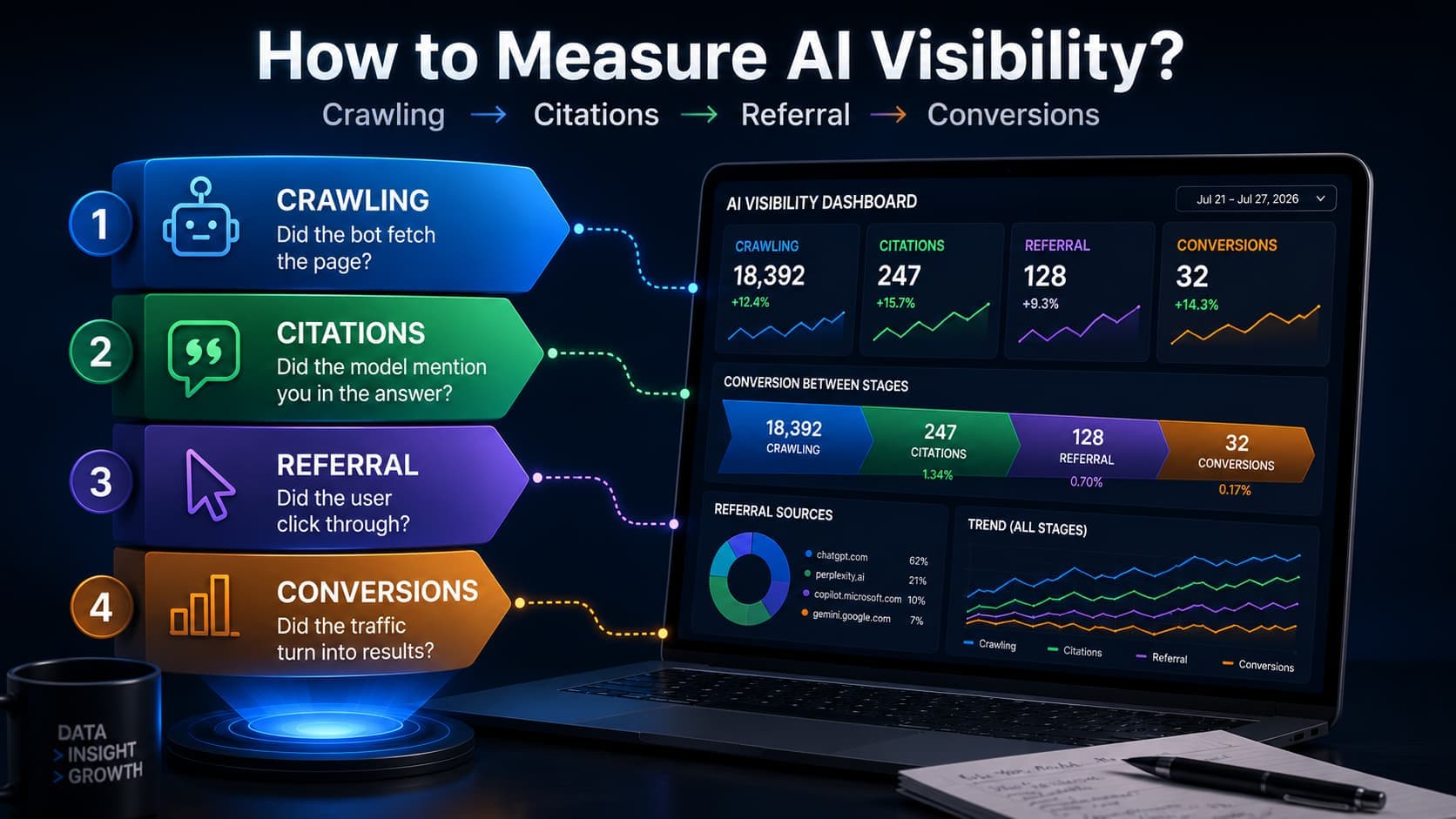
Measuring AI Visibility: GEO KPIs and a Monitoring Dashboard
Are you visible in AI answers, and how would you know? GEO KPIs across four layers: crawl, citation, referral and conversion, plus how to build the dashboard.
The GEO Guide to AI Search Engines: A Technical Roadmap for Getting Cited by ChatGPT, Perplexity, and Gemini
What is GEO (Generative Engine Optimization) and how is it different from SEO? Does llms.txt actually work? A 2026 technical guide with schema.org, WebMCP, and copy-paste code examples.

WebMCP: When AI Agents Use Your Site by Talking, Not Clicking
A single line in a PageSpeed report - 'agentic browsing' - opened a door to what might be the web's next big shift. What is WebMCP, how does it differ from MCP, and why should you care about it from an SEO and GEO perspective? A technical founder's take, with real code examples.
Let's Talk About Your Project
How can we apply this service to your project?
Fill out the quote form for a free 30-minute discovery call.