GEO (Generative Engine Optimization) is the practice of structuring content so large language models (LLMs) can easily read it and cite it as a source in their own answers. It does not replace SEO; it is a layer built on top of it. The core tools are clear definition blocks, FAQPage/DefinedTerm schema, comparison tables, server-side rendered (SSR) content and (with the right expectations set) an llms.txt file, and this article practices what it preaches.
Some of the people reading this article aren't people.
That's a bold way to open, but it's the reality now: ChatGPT, Perplexity, and Google's AI Overviews crawl, read, and summarize websites on a user's behalf. When answering a question, the decision of which brand to mention, which sentence to cite, which site to treat as "trustworthy" is no longer made by a search ranking; it's made by a language model.
This article does two things. First, it clarifies what GEO (Generative Engine Optimization) actually is, and separates what's real from what's marketing hype, because this space has a lot of claims and very little verified data behind them. Second, it gives you copy-paste-ready code so your site works for both humans and bots.
What Is GEO?
GEO (Generative Engine Optimization): The practice of structuring content so generative AI models (ChatGPT, Gemini, Perplexity) can use it as a source in their own answers.
SEO's goal was ranking at the top of search results. GEO's goal is slightly different: when an AI answers a question, you want it to reference your brand, your data, or your sentence. The two aren't mutually exclusive: GEO is a layer built on top of SEO, not a replacement for it.
Why Now?
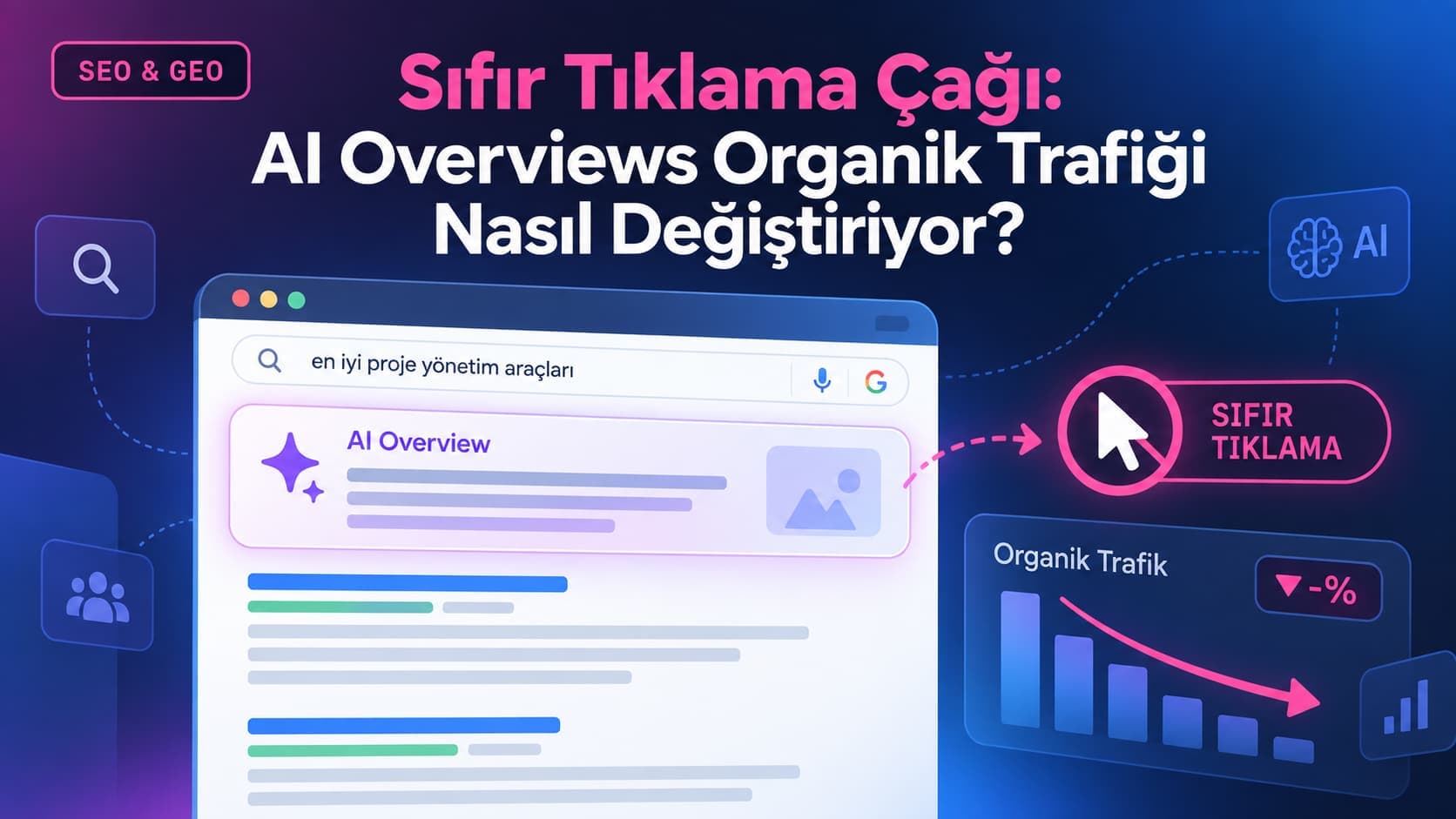
User behavior is changing. Search is no longer just "10 blue links." Google's AI Overviews, ChatGPT's search mode, and tools like Perplexity now give users a direct, synthesized answer to their question, and often the user ends their search without clicking through to any site at all. The industry calls this the "zero-click" trend.
The practical takeaway: ranking well on Google still matters, but there's now a second question too: "When someone asks ChatGPT to recommend an MVP development partner in Turkey, does your name come up?" These are two different games, and both are worth playing.
How Do AI Bots Read Your Site?
What happens when an AI bot visits your site? Every major AI company runs its own bot (user-agent): OpenAI's GPTBot and OAI-SearchBot, Anthropic's ClaudeBot, Perplexity's PerplexityBot, Google's Google-Extended. These bots crawl your pages, read the HTML, and fold the content into either model training or live answer generation (retrieval).
Is JavaScript-rendered content a problem? Usually, yes. Most AI bots don't have JavaScript-rendering capabilities as advanced as Googlebot's. Your critical text needs to be readable in server-side rendered (SSR) HTML, without JavaScript running at all. It's easy to check: right-click on your page → "View Page Source," and see if the text you're looking for is visible to the naked eye.
Which sentences do bots consider "worth citing"? Self-contained, clear, attributable sentences. Not vague statements like "there are different views on this," but definitions that resolve in a single sentence, like: "GEO is the practice of structuring content so AI models can cite it in their answers."
GEO vs. SEO
| Dimension | Traditional SEO | GEO |
|---|---|---|
| Goal | Rank at the top of search results | Get cited/referenced in AI answers |
| Success metric | Ranking, click-through rate (CTR), organic traffic | Citation frequency, brand mentions in AI answers |
| Content format | Keyword-dense, long-form articles | Clear, self-contained paragraphs that answer directly |
| Technical priority | Backlinks, page speed, Core Web Vitals | Structured data (schema.org), clear definitions, SSR |
| Measurement | Google Search Console, Analytics, Ahrefs/Semrush | Still immature: brand-mention tracking, manual testing |
| Freshness signal | Periodic updates are enough | Visible "last updated" date, frequent revisions |
Does llms.txt Actually Work? (The Honest Answer)
Most GEO guides describe llms.txt as "the magic key that pulls AI bots to your site." The data says otherwise, and knowing this difference is what will set you apart from most of your competitors.
What is llms.txt? A Markdown file at your site's root (/llms.txt) that tells AI systems what your site is and which pages matter most. Proposed in 2024 by Jeremy Howard (Answer.AI), modeled on robots.txt.
Here's the reality: A study of 300,000 domains found that roughly one in ten sites has an llms.txt file, a low adoption rate after eighteen months of industry discussion. More striking: a separate analysis of hundreds of millions of AI bot visits found that search/answer bots (GPTBot, ClaudeBot, PerplexityBot, Google-Extended) almost never request the file directly; the number was statistically negligible. Google's Gary Illyes confirmed in the summer of 2025 that Google doesn't support llms.txt and has no plans to; John Mueller compared it to the "meta keywords" tag the SEO world abandoned long ago.
In other words: installing llms.txt will not make you visible in ChatGPT's answers tomorrow. We wanted to say that plainly, because plenty of content out there claims the opposite.
So why do we still recommend it? Because its real value lies elsewhere: developer tooling. Coding assistants like Cursor, Windsurf, Claude Code, and GitHub Copilot routinely look for /llms.txt when pointed at a documentation site. API-first companies like Stripe, Cloudflare, and Anthropic publish the file, not for SEO, but for developer experience. For a software and AI company like Detartech, this is a low-cost, zero-risk infrastructure investment: it won't drive traffic today, but the day an AI provider decides to take the file seriously, you'll already be ready.
Example file (https://detartech.com/llms.txt, adapt with your own real URLs):
# Detartech Technology
 > A Turkey-based software consultancy. We offer MVP development, CTO as a Service,
> mobile app development, AI solutions, and DevOps services.
 ## Key Pages
- [Services](https://detartech.com/en/services): Software development, mobile apps, AI, and DevOps
- [Blog](https://detartech.com/en/blog): Technical articles on SEO, GEO, and software engineering
- [CTO as a Service](https://detartech.com/en/services/cto-as-a-service): Technical leadership and strategy consulting
 ## Notes
- Primary content is published in Turkish; English versions live under /en/
- Last updated: 2026-07-01
A companion step: check your robots.txt: independent of llms.txt, make sure you're not accidentally blocking AI bots:
User-agent: GPTBot
Allow: /
 User-agent: OAI-SearchBot
Allow: /
 User-agent: ClaudeBot
Allow: /
 User-agent: PerplexityBot
Allow: /
 User-agent: Google-Extended
Allow: /
 Sitemap: https://detartech.com/sitemap.xml
Structured Data with Schema.org
Structured data (JSON-LD) tells bots explicitly whether your page is an article, an FAQ, or a definition. Three examples. Add these inside a <script type="application/ld+json"> tag on your page:
FAQPage (for your FAQ section, matches the FAQ section below):
{
  "@context": "https://schema.org",
  "@type": "FAQPage",
  "mainEntity": [
    {
      "@type": "Question",
      "name": "Does GEO replace SEO?",
      "acceptedAnswer": {
        "@type": "Answer",
        "text": "No. GEO is an additional layer built on top of SEO. Your technical SEO foundation still matters; GEO adds the dimension of making content understandable and citable by AI."
      }
    },
    {
      "@type": "Question",
      "name": "Should I set up llms.txt?",
      "acceptedAnswer": {
        "@type": "Answer",
        "text": "Yes, but without expecting an immediate traffic boost. Its real value is for developer tools and future platform support."
      }
    }
  ]
}
DefinedTermSet (for your glossary):
{
  "@context": "https://schema.org",
  "@type": "DefinedTermSet",
  "name": "Detartech GEO Glossary",
  "hasDefinedTerm": [
    {
      "@type": "DefinedTerm",
      "name": "GEO",
      "description": "The practice of structuring content so generative AI models can cite it as a source in their answers."
    },
    {
      "@type": "DefinedTerm",
      "name": "llms.txt",
      "description": "A Markdown file at a site's root that tells AI systems which pages on the site matter most."
    }
  ]
}
Article (for the blog post itself):
{
  "@context": "https://schema.org",
  "@type": "Article",
  "headline": "The GEO Guide to AI Search Engines",
  "datePublished": "2026-07-01",
  "dateModified": "2026-07-01",
  "author": {
    "@type": "Organization",
    "name": "Detartech Technology"
  }
}
WebMCP: The Next Layer
If llms.txt is the file that tells AI systems "who you are," WebMCP is the layer that tells them "what you can do."
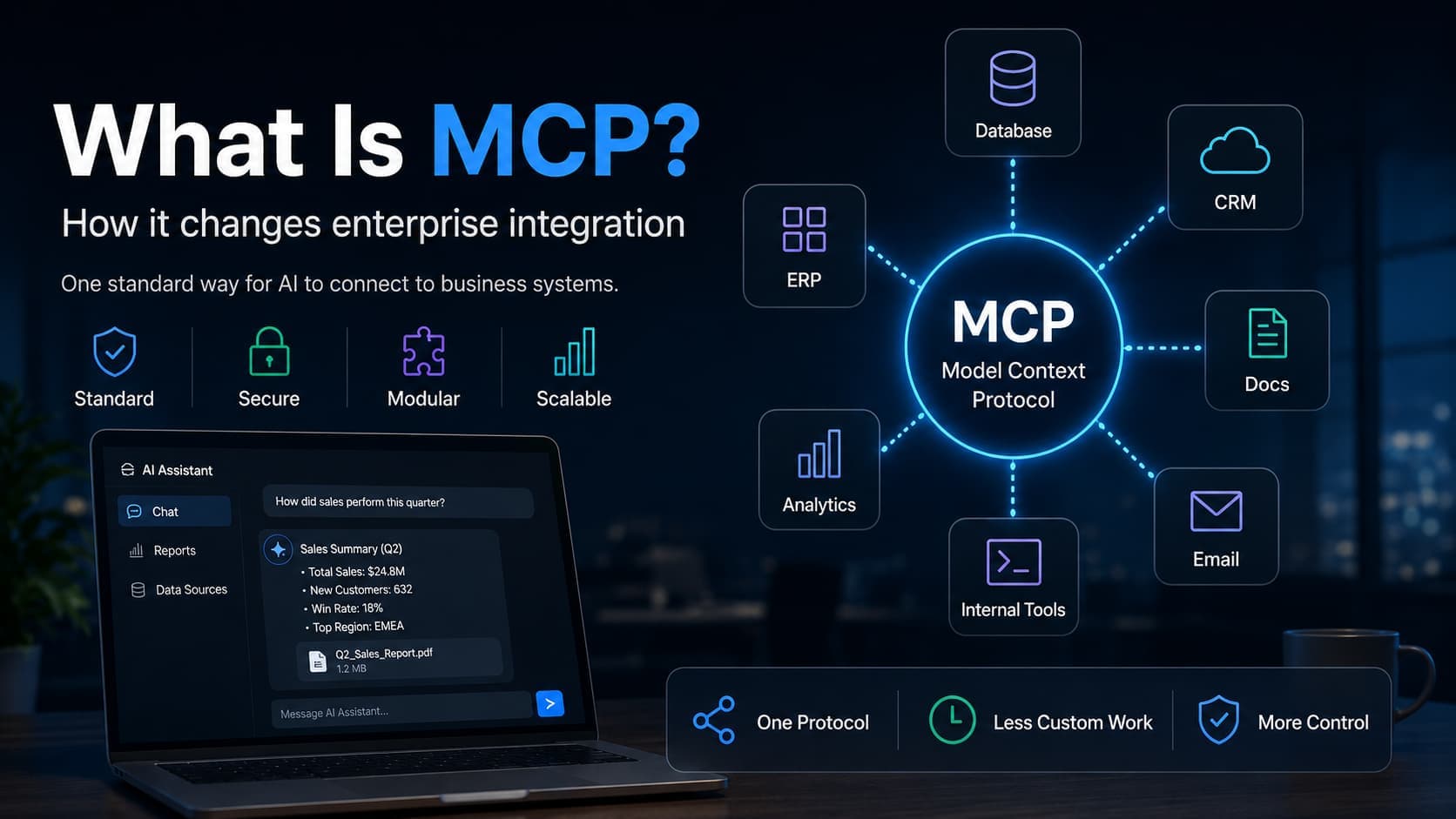
WebMCP (Web Model Context Protocol) is a browser API being developed by Google and Microsoft under the W3C Web Machine Learning Community Group. Unlike Anthropic's server-side MCP (Model Context Protocol), WebMCP runs entirely client-side, inside the browser, and exposes a new JavaScript interface called navigator.modelContext.
The difference is concrete: today, when an AI agent lands on your site, it takes a screenshot and guesses which button to click. On a WebMCP-enabled site, the agent can instead call the functions the site directly exposes: "book an appointment," "check pricing," "start a WhatsApp conversation"; no guessing, just a direct call.
Given the lead-generation and WhatsApp-focused campaigns you run for Detartech's clients, this layer is an interesting mid-term opportunity: when a browser agent is executing a task like "find a trustworthy provider for this service and reach out on WhatsApp" on a user's behalf, a WebMCP-enabled site can fulfill that request directly, without the agent having to guess its way through a form.
Let's be realistic about timing: the spec is still a W3C Community Group draft, not a formal standard. Browser support is limited (experimental preview in Chrome; no support yet from Firefox or Safari). "Watch and learn" for the second half of 2026, "pilot it" for 2027 is a sensible timeline.
Glossary of Terms
- GEO (Generative Engine Optimization): The practice of structuring content so generative AI models can cite it as a source in their answers.
- SEO (Search Engine Optimization): The practice of optimizing content to rank higher in traditional search engines.
- LLM (Large Language Model): The general term for large language models like ChatGPT, Claude, and Gemini.
- RAG (Retrieval-Augmented Generation): A model pulling information live from the web or a database while generating an answer.
- Crawler / Bot / User-Agent: Software that automatically visits web pages and collects content. Each AI company has its own user-agent name (GPTBot, ClaudeBot, etc.).
- Structured Data (Schema.org): Code, usually in JSON-LD format, that explicitly tells machines what type of content a page contains.
- llms.txt: A Markdown file at a site's root that tells AI systems which pages on the site matter most.
- MCP (Model Context Protocol): Anthropic's open, server-side protocol for connecting AI models to external data sources and tools.
- WebMCP: MCP brought to the browser; a draft W3C standard that lets websites expose their own functions to AI agents as directly callable tools.
- E-E-A-T: Google's content-quality criteria: Experience, Expertise, Authoritativeness, Trustworthiness.
FAQ
Does GEO replace SEO? No. GEO is an additional layer built on top of SEO. Your technical SEO foundation (speed, mobile-friendliness, backlinks, site architecture) still matters; GEO adds the dimension of making content understandable and citable by AI.
Should I set up llms.txt? Yes, but with the right expectations: it's not a guarantee of an immediate traffic bump in AI search. It's a low-cost investment in developer tooling and future platform support.
When will I see results? Classic SEO impact on Google takes weeks to months. "Citation" in AI answer engines is more variable: some platforms crawl and use new content within days, others take much longer. It's too early to give a precise timeline; the field is simply too new.
Is WebMCP worth implementing now? Not yet, but it's worth tracking. The spec is still in draft, and browser support is limited.
Which bots should I allow in robots.txt? It depends on which platforms you want to be visible on: GPTBot and OAI-SearchBot (OpenAI), ClaudeBot (Anthropic), PerplexityBot (Perplexity), Google-Extended (Google's AI features). Make sure you're not accidentally blocking any of them.
Implementation Checklist
- Add a clear, one-sentence definition/summary paragraph to every page (within the first 100 words)
- Add an FAQ section marked up with
FAQPageschema (at least 4-5 questions) - Add a visible "last updated" date to blog posts
- Confirm your critical content is readable without JavaScript (check via View Source)
- Add explicit
Allowrules inrobots.txtfor GPTBot, ClaudeBot, PerplexityBot, Google-Extended, and OAI-SearchBot - Publish an
llms.txtfile, without expecting an SEO miracle, keeping the "why" section above in mind - Add
Article,Organization, andDefinedTermschema across your site - Add WebMCP to your watch list; plan a pilot evaluation for H2 2026
- Produce original data or case studies (before/after results): the one thing nobody can copy
Closing: This Article Practices What It Preaches
The definition blocks, Q&A headers, comparison table, code examples, and visible "last updated" date you just read through are all a live application of the GEO techniques this article recommends. The next step is to publish it, and in a few weeks, check your server logs to see whether GPTBot, ClaudeBot, and PerplexityBot have stopped by.
If you want to work with us on GEO, see our GEO service page, and our SEO service page for its classic-search counterpart.
We cover how we measure this visibility in our Measuring AI Visibility article, how AI agents use sites in our WebMCP article, and how zero-click is changing organic traffic in our Zero-Click Era article; for the technical basics, see our llms.txt page.
Related Technologies