Perplexity
Perplexity is an AI-powered search engine that challenges traditional search engines by delivering sourced, summarised answers. From a GEO perspective, being visible on Perplexity opens the door to next-generation organic traffic.
Features
- Real-time web-searched AI answers
- Source-cited summarisation
- Application integration via Sonar API
- OpenAI API-compatible interface
- GEO visibility strategy
- Research-focused AI search experience
Use Cases
- Brand visibility increase for GEO
- Research assistant applications
- Chatbots requiring real-time information
- Market research and competitor tracking tools
Deep Dive
Perplexity: The Rise of the AI Search Engine
Perplexity AI is an AI search engine that answers user queries by scanning the web in real time and summarising responses with their sources. Positioned as an "answer engine," Perplexity delivers direct, contextual answers instead of a traditional list of "blue links." Reaching millions of daily queries by 2024, Perplexity is growing rapidly, especially among research and professional users.
From a GEO (Generative Engine Optimization) perspective, Perplexity's importance lies in its direct citations from web sources in its answers, making being cited as a source on Perplexity a concrete goal for brands. Sources cited on Perplexity are presented as visible links to users, making them valuable for brand authority and referral traffic.
The Sonar API and Application Integration
Perplexity's Sonar API allows developers to add real-time web-searched AI answer capability to their own applications. With an interface compatible with the OpenAI API, the Sonar API can be added to existing LLM integrations with minimal changes.
In GEO projects, Detartech strengthens content strategy to increase Perplexity visibility with Schema.org structured data, E-E-A-T signals, and authority backlinks. It also offers Sonar API integration for research-heavy applications, providing users with a stream of up-to-date, sourced information.
What Have We Built With This?
Services Where It's Used
View AllGEO - Generative Engine Optimization
AI engines do not rank, they select sources. We make your site citable with llms.txt, structured data, E-E-A-T, a written crawler policy and WebMCP.
CTO as a Service
CTO as a Service (fractional CTO): tech leadership without a full-time hire. Architecture decision records, tech debt inventory, vendor and team evaluation.
Our Example Projects
View All
Paşa Yapı Tasarım - Facade & Decoration Corporate Website
Bilingual (TR/EN) corporate website for Paşa Yapı Tasarım, an Istanbul facade, interior, ceiling and flooring firm since 1992. 22 application pages, a 6-step quote wizard, e-catalog and AI-search-ready SEO.

bebekistiyorum.com - Multilingual IVF Clinic Website, SEO and GEO
Eurofertil IVF Centre's legacy ASP.NET site was rebuilt as a 4-language Next.js platform: 1,200+ URLs preserved with 301 mapping plus full SEO and GEO setup.

Tegoly - Digital Signature and Business Process Platform
New screens, functional modules and SEO improvements delivered to an international digital signature platform.
Related Articles
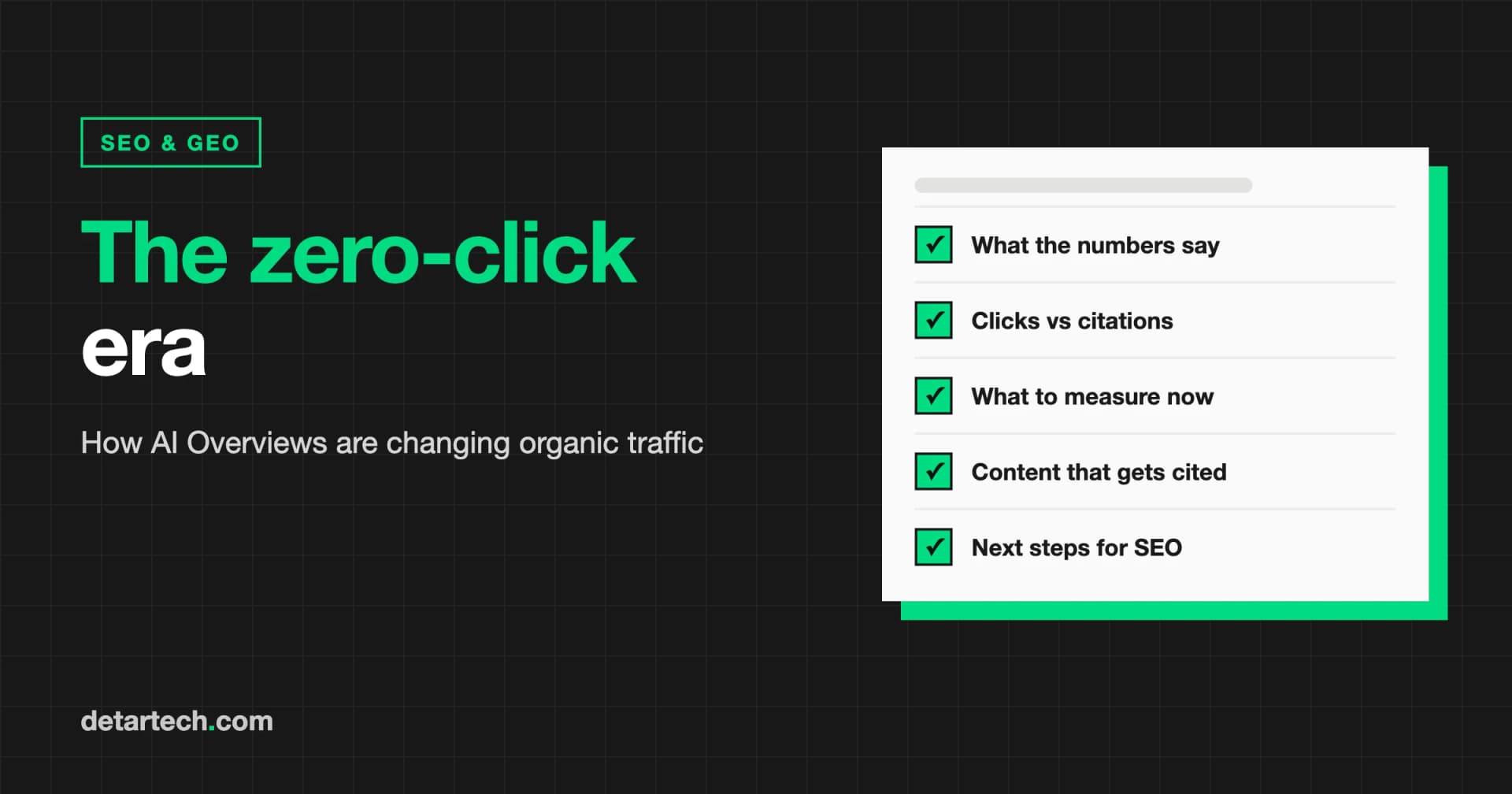
The Zero-Click Era: How AI Overviews Are Changing Organic Traffic
More than two thirds of US Google searches now end without a click. That does not mean SEO is over, but it does mean you need to change what you measure.
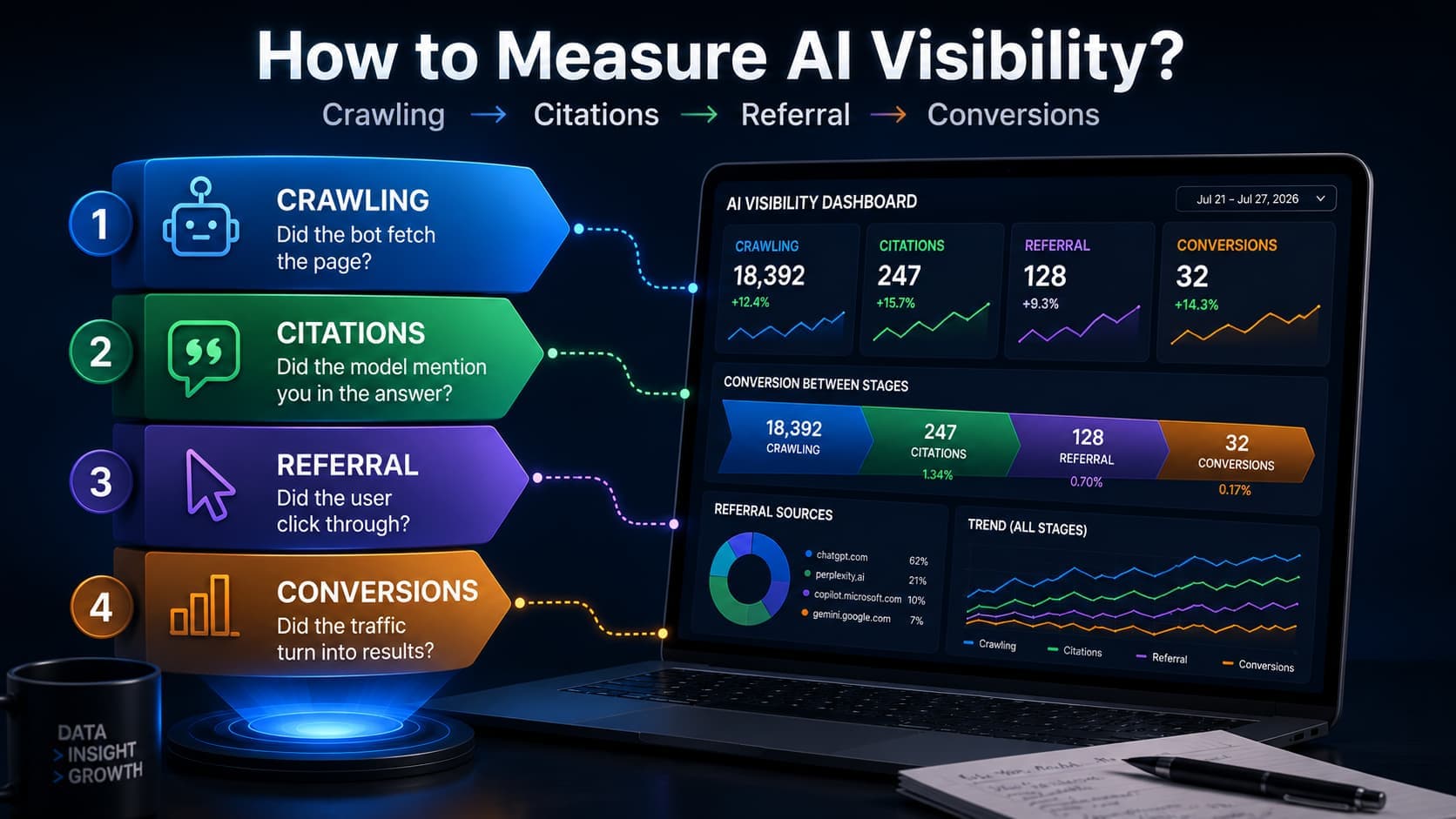
Measuring AI Visibility: GEO KPIs and a Monitoring Dashboard
Are you visible in AI answers, and how would you know? GEO KPIs across four layers: crawl, citation, referral and conversion, plus how to build the dashboard.
The GEO Guide to AI Search Engines: A Technical Roadmap for Getting Cited by ChatGPT, Perplexity, and Gemini
What is GEO (Generative Engine Optimization) and how is it different from SEO? Does llms.txt actually work? A 2026 technical guide with schema.org, WebMCP, and copy-paste code examples.
Let's use this technology in your project
Our team specializes in this stack. Let us evaluate your project together.
Request a Free Discovery Call