Which AI model to integrate into your project depends less on the highest benchmark score and more on three questions: whether your data may leave the company, how many tokens you process each month, and how much context the model has to see at once. If data cannot leave, the open-weight Qwen3.8-27B or Kimi K3 lead; if volume is high and cost matters, Qwen3.8-Max or the Kimi K3 API; for long, complex autonomous tasks, Claude Fable 5.2. For most teams the right answer is not one model but two, split by task.
Over the past months we covered each model in its own article: Qwen 3.8, Kimi K3 and Claude Fable 5.2 and Opus 5.5. Here we put them side by side and explain which one fits which job in an enterprise integration. All figures are the vendors' published numbers, cited with sources in those articles.
Why is model selection a business decision, not a technical one?
Benchmark tables compare models on the same test, but your project is not that test. The real cost of a model is set by how many tokens you process each month, where the data has to stay, how long users are willing to wait and how dependent you are willing to be on one vendor. The same model can be the right choice for one company and an expensive mistake for another.
That is why selection starts from the job, not the model. A customer support bot, contract analysis, a codebase migration and an assistant that summarizes search results are all called "AI integration", yet their context, volume and privacy needs are very different. We collected the questions to ask the team doing the work in how to choose an AI integration company.
How do the three models compare at a glance?
| Criterion | Qwen 3.8 | Kimi K3 | Claude Fable 5.2 |
|---|---|---|---|
| Developer | Alibaba | Moonshot AI | Anthropic |
| Access | Max: API; 27B: open weights (Apache 2.0) | API and open weights | API only (closed model) |
| API price (per 1M tokens, input / output) | Max: $2 / $6 | $3 / $15 (cache hit $0.30) | $8 / $40 |
| Context window | Max: 1M (hosted); 27B: 262,144 tokens native | 1M tokens | 1M tokens, up to 128K output tokens |
| Running it yourself | 27B: possible, an FP8 version needs less memory | About 1.4 TB of weights and a multi-node GPU cluster | Not possible |
| Where it stands out | Computer use, multimodal input, cost | Frontend code, long coding sessions | Long-horizon autonomous tasks, complex reasoning |
Which projects is Qwen 3.8 the right choice for?
Qwen 3.8 is two separate models, so be clear about which one you mean. Qwen3.8-Max is a Mixture-of-Experts model with 2.4 trillion parameters, 95 billion of them active per token, and it takes text, image and video input natively. Its API price is $2 input and $6 output per million tokens, the lowest of the three. On OSWorld-Verified, which measures computer use, it scored 86.1, ahead of Claude Fable 5 at 85.0.
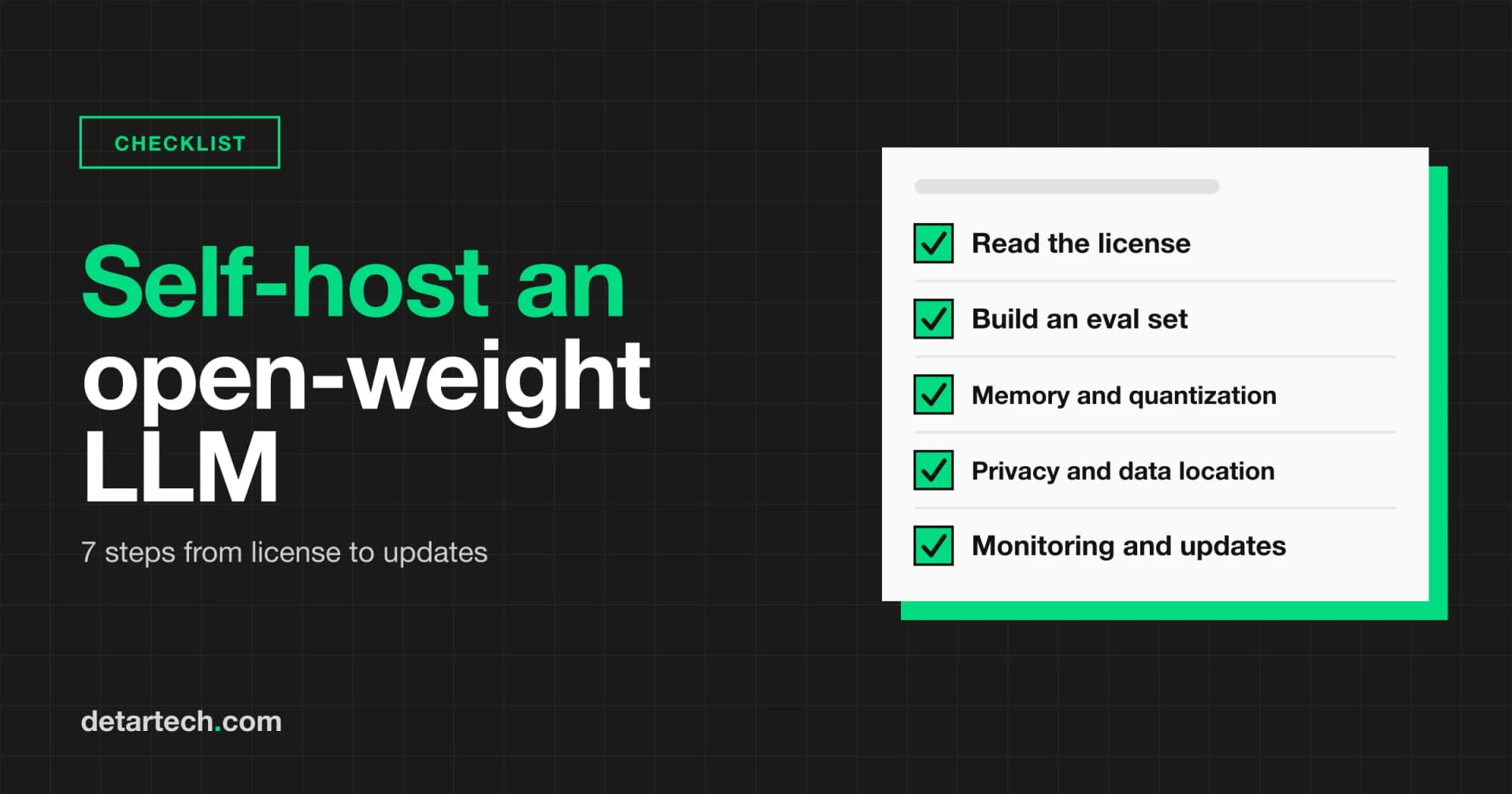
Qwen3.8-27B is a dense model you can run on your own infrastructure. Its Apache 2.0 license is confirmed in the actual license file: commercial use is allowed and there is no revenue share. For projects where data sovereignty is mandatory and volume is steady, it becomes cheaper than the API past a certain threshold. We listed what to check before setting it up in our self-hosting open-weight LLM checklist.
Three caveats apply. The downloaded model has a native context of 262,144 tokens; the 1 million figure belongs to the hosted version. In independent tests the 27B runs about three times slower than its predecessor and uses more tokens. And every benchmark number was reported by Alibaba itself. In a latency-sensitive customer interface these three points can quickly erase the advantage on paper.
Which projects is Kimi K3 the right choice for?
Kimi K3 is a Mixture-of-Experts model with 2.8 trillion parameters that activates only 16 of its 896 experts per token, so its inference cost is roughly that of a 50 billion parameter model. At launch it took first place on the Frontend Code Arena leaderboard with 1,679 points, and its 1 million token context lets it see an entire codebase at once. It is a strong candidate for product teams heavy on interface code and for long coding sessions.
The API costs $3 input and $15 output per million tokens. The real difference is the cache price: $0.30 per million tokens for reused context. In agent workflows that run again and again over the same codebase or document set, this lowers the bill noticeably. On the other hand, the model thinks before every answer and those reasoning tokens are billed as output, so token budgets need monitoring in production.
Open weights open the door to data sovereignty, but the scale is serious: running it yourself takes about 1.4 TB of weight storage and a multi-node GPU cluster. Moonshot also acknowledges limits: quality drops in agent harnesses that trim the reasoning history, it tends to act rather than ask when things are ambiguous, and its conversational fluency trails Claude Fable.
Which projects is Claude Fable 5.2 the right choice for?
Claude Fable 5.2 is the model Anthropic announced on 9 November 2026 and positioned for long-horizon, multi-step autonomous tasks. It comes with a 1 million token context, up to 128 thousand output tokens and an always-on thinking system. For work that runs for hours, such as moving a large application to a different technology or analyzing a complex system architecture, it is the model Anthropic recommends.
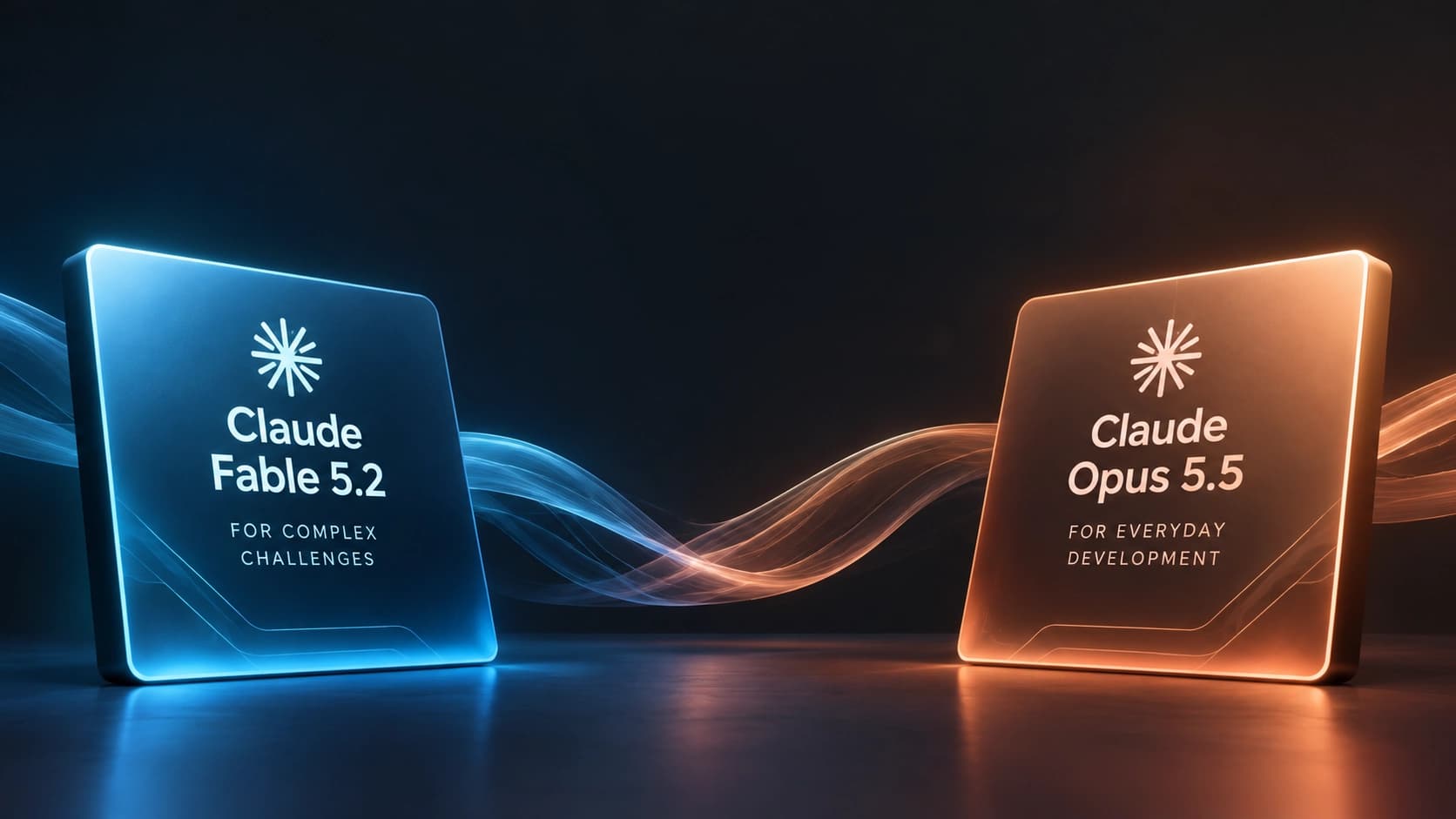
The trade-off is price: $8 input and $40 output per million tokens, four to almost seven times Qwen3.8-Max. That is why Anthropic itself recommends starting with Opus 5.5 for most coding and knowledge work and keeping Fable 5.2 for genuinely long and complex tasks. Opus 5.5 runs at 40 percent lower cost than the previous Opus 5 on typical workloads.
As a closed model it cannot run on your own servers; data passes through the vendor's infrastructure. Factor in access risk as well: in June 2026 an export control directive shut off access to Fable 5 on every platform for about three weeks. If you tie a critical workflow to a single closed model, design a fallback model path from the start.
Which criteria should drive an enterprise integration decision?
Data privacy. If personal data or source code cannot leave the company, the choice narrows to a model running on your own infrastructure: in practice Qwen3.8-27B, or Kimi K3 if you have the resources. If you will use an API, define up front which data may reach the model; we cover that boundary in detail in GDPR-compliant AI.
Cost. Measure cost per completed task, not the list price. A cheap model that needs three attempts can cost more than one attempt with an expensive model. Cached pricing decides repeated-context workloads, and your own infrastructure decides steady volume. See LLM cost optimization for detailed methods.
Context window. Not every scenario needs 1 million tokens. A support bot works with a few thousand tokens, while a codebase migration needs hundreds of thousands. If you run Qwen3.8-27B yourself, remember the limit is 262,144 tokens.
Latency and vendor dependency. Use fast, smaller models where users wait and stronger models for long background jobs. If you abstract the model layer instead of hard-wiring one vendor's API into your code, switching models when prices or access change becomes a configuration task.
The only reliable way to see how a model behaves on your workload is a small comparison with your own data. We run model selection, self-hosting and product integration work under our AI solutions service; you can send us your needs through the quick quote form.
Frequently Asked Questions
Which AI model is more suitable for enterprise use? There is no single right model. If data cannot leave the company, Qwen3.8-27B leads; if cost comes first, Qwen3.8-Max, or Kimi K3 with caching; for long, complex autonomous tasks, Claude Fable 5.2. Most teams pair a cheaper model for daily work with a stronger one for hard tasks.
How should data privacy be assessed when choosing a model? First classify the data that will reach the model: does it contain personal data, trade secrets or source code? If so, running an open-weight model on your own infrastructure is the safest route. If an API will be used, mask the data, send only the part that is needed and check the vendor's data retention terms at contract level.
What are the API prices of Qwen 3.8, Kimi K3 and Claude Fable 5.2? Input and output prices per million tokens are: Qwen3.8-Max $2 and $6, Kimi K3 $3 and $15 (cache hit $0.30), and Claude Fable 5.2 $8 and $40. With Kimi K3, reasoning tokens are also billed as output.
Is running an open-weight model on our own servers always cheaper? No. Self-hosting removes per-token payments but replaces them with hardware and operating costs. With steady, high volume it becomes cheaper past a certain threshold; if volume fluctuates or you need the highest capability, an API is usually the better choice.
Related Services