CTO as a Service (also called a fractional CTO or part-time CTO) is a way for a company to get senior technical leadership for a set number of hours or a defined period, without hiring a full-time Chief Technology Officer. The role does not replace the people writing code; it makes the technical decisions that are expensive to reverse, such as architecture, technology and vendor choices, hiring and security, writes them down with the reasoning, and leaves that record with the company. It fits non-technical founders, startups that have not yet made their first technical hire, and SMEs whose software is built by an outside team.
What exactly is CTO as a Service?
"Fractional CTO", "part-time CTO", "outsourced CTO" and "CTO as a Service" describe the same model. The shared idea: the company's need for technical leadership is real, but not continuous enough to fill a full-time executive role. Decisions arrive in bursts, before a funding round, when choosing the first agency, before launch, when switching vendors, with weeks of building and measuring in between.
What makes the service concrete is its output. At the end of a well-run fractional CTO engagement the company holds architecture decision records (ADRs), a current-state assessment, a technical debt inventory, vendor evaluation notes and an account and access list with named owners. Advice given in a meeting and then forgotten does not count as output.
What CTO as a Service is not
- It is not a rented developer. Adding a developer solves a capacity problem, not a decision problem. If nobody decides what should be built, an extra developer only helps the team go the wrong way faster.
- It is not a one-off consulting report. A consultant who visits once and leaves a report never sees the questions that come up while the report is being implemented. The value of a fractional CTO is following a decision through and reopening it when the evidence says so.
- It is not a legal officer of the company. A fractional CTO usually has no signing authority and is not the line manager of your engineers. Budget, hiring and vendor selection stay with you; the fractional CTO writes the recommendation and the reasoning.
- It is not a project manager. Daily task allocation and sprint tracking stay with your team or agency.
Who needs a fractional CTO?
Non-technical founders before the MVP
The idea is ready, the budget is limited and a first software partner has to be chosen. Some decisions made here cannot be undone later: whose name the cloud and domain accounts are opened under, where the data lives, how narrow the first scope should be. A technical reviewer sharpens the questions to ask agencies; we collected them in questions to ask when choosing an MVP agency.
Startups between seed funding and the first technical hire
Money has been raised and the product works, but nobody in the company owns technical decisions. Who the first engineers should be, the interview bar, and preparing for the next investor's technical due diligence all belong to this stage.
SMEs with an outsourced development team
When an agency or freelancers build the product, code gets produced but nobody on the client side asks whether it is right. A fractional CTO becomes your technical counterpart: reading proposals, checking deliveries and securing account ownership.
Companies taking a vibe-coded product to production
A prototype built quickly with AI tools needs a review of authentication, authorisation, secrets management and backups before real users arrive. We describe the technical side of that step on our Vibe-Code to Production service page.
Companies evaluating vendors or agencies
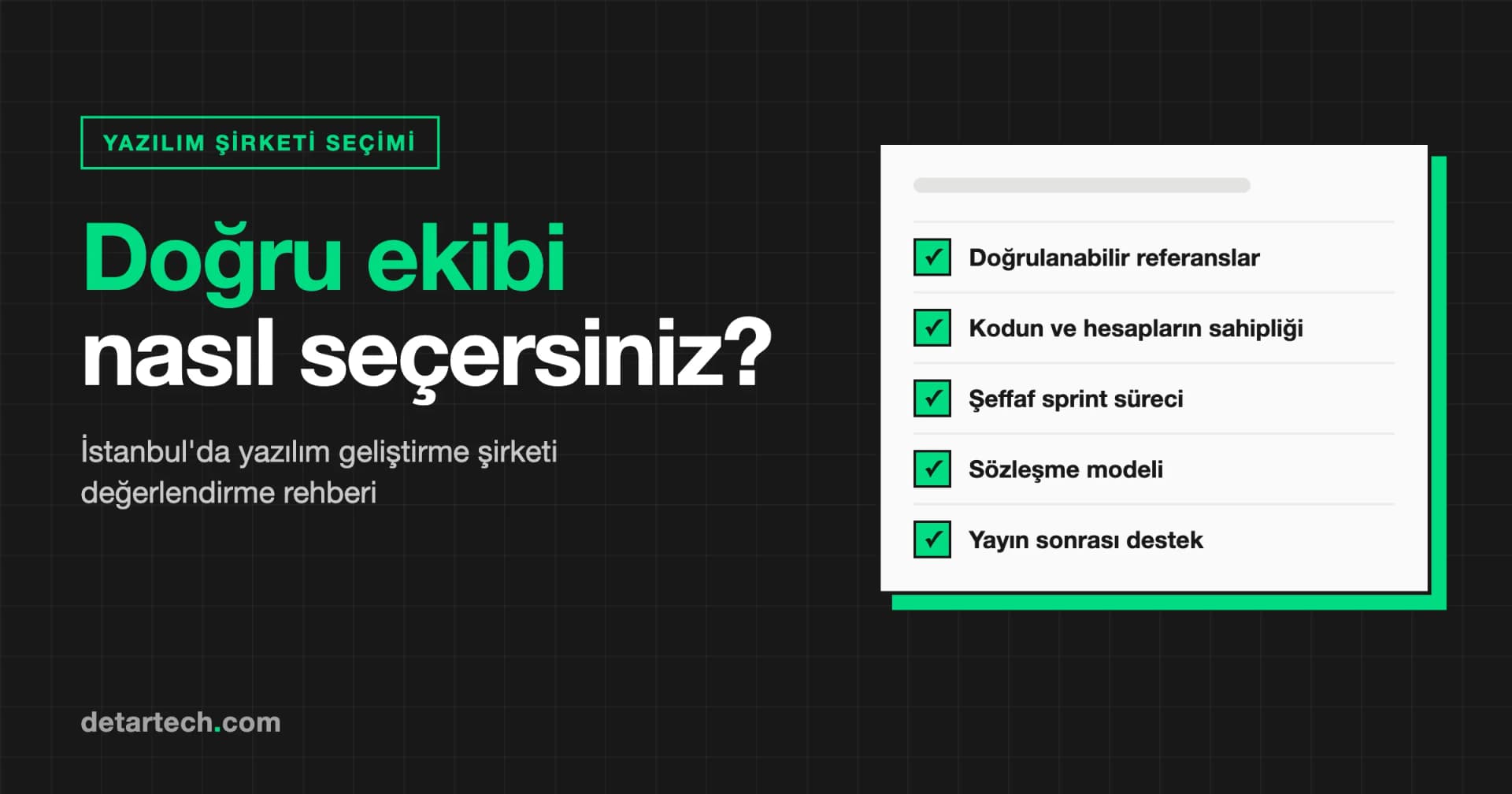
Deciding whether to stay with the current agency or pick a new software partner requires technical judgement. General criteria are in our guide on how to choose a software development company; a fractional CTO applies them to your project and actually reads the code.
What does a fractional CTO do?
Scope varies by company, but a typical CTO as a Service engagement covers the following:
- Architecture decisions and ADRs: Each significant decision fits on one page: the question, the options considered, the chosen path, the reasoning and the condition that would justify reopening it. We cover the underlying principles in how to design scalable and maintainable software architecture.
- Review of irreversible decisions: Where user identity and customer data separation is built, which country the data sits in, whose name the accounts are under, how payment and invoicing logic is embedded in the data, and the first API contract published to the outside. These deserve written justification; reversible decisions do not need the same overhead.
- Technical debt inventory: Technical debt in the codebase, knowledge debt between the team and the code, and intent debt from decisions whose reasoning was never written down are listed separately. Each item goes into one of three boxes: must change before growth, can live as it is, will never be touched.
- Vendor and agency evaluation, code audits: Is the repository in your account with its full history, does the project build from scratch on a clean machine, are decisions written down?
- Hiring support: Sitting in the technical part of interviews and writing the evaluation criteria. The hiring decision stays with you.
- Security and data protection posture: Whether secrets sit in the repository, who can push to production, whether a restore from backup has ever been tested, and where personal data is stored under KVKK (Turkey's data protection law) or GDPR.
- Roadmap and budget input: Translating the technical state into language a board or investor can read: what the risk is, what it costs, and when it comes due.
Which engagement models exist?
Three models are common, and most agreements mix them:
- Retainer: A regular block of time reserved for a period. Suits companies where decisions keep coming, but not every day.
- Milestone-based: Work tied to one goal, for example technical due diligence before a round, switching agencies, or a pre-launch review. The engagement closes when the goal is met.
- Interim CTO: Covering the role more intensively until a permanent CTO is hired. Here it matters to write the boundaries down first: who holds signing authority, line management and budget approval?
What drives cost is less the model than the density of decisions: more teams, vendors and integrations mean more decisions. The current state of the system (scattered accounts, missing documentation) and the need for regular meetings also shape the scope, which is why it should be drawn in writing at the first meeting.
Full-time CTO vs fractional CTO vs an agency's lead developer
| Criterion | Full-time CTO | Fractional CTO | Agency lead developer |
|---|---|---|---|
| Accountable to | The company and its board | The company, within a contracted scope | The agency and its delivery targets |
| Time commitment | Full-time, continuous | Periodic or goal-based | For the project's duration, on project work |
| Cost structure | Salary, benefits, usually equity | Periodic fee set by scope | Inside the project budget |
| Independence from delivery | High, but the team is theirs | High; if they also deliver, conflict of interest must be managed | Low, evaluates their own team's work |
| People management | Yes, directly | No, criteria and interview support | Agency team only |
| Best fit | A new architecture question every week | Decisions arriving in bursts | Scope and architecture already settled |
How to choose a CTO as a Service provider
Checklist
- Which documents are delivered at the end? Ask for concrete outputs such as ADRs, a debt inventory and an access list.
- Whose access do those documents live under? The right answer is yours.
- Whose name are the cloud, domain and repository accounts opened under? An account in the provider's name turns a parting of ways into a legal problem.
- Are recommendations written with options? There should be a named alternative and the cost of both sides.
- Is the role's boundary written down? Who holds signing authority, the hiring decision and the budget?
- How is the exit defined? Success should mean the engagement becoming unnecessary, not being renewed.
- Can they discuss the regulations in your sector, such as KVKK, payments or health data?
Red flags
- Every recommendation leads back to the provider's own development services.
- A rewrite of a working system proposed without written justification.
- Decisions living only in meetings and chat threads, never written down.
- Accounts and credentials held in the provider's name.
- "We'll handle everything", with no willingness to define the role's limits.
How do you manage the conflict of interest when the same firm advises and delivers?
Buying advice and delivery from the same firm is a genuine conflict of interest: the firm ends up evaluating its own work. That alone is not a reason to refuse, since someone who knows the context moves faster, but it has to be managed. Practical safeguards: every recommendation names an alternative and the cost of both; decision records live under your access so they can be audited later; the contract gives you an explicit right to an independent second opinion on critical decisions (rewrites, technology changes, large budgets); and audits of existing code are done by someone who did not write that code.
When should you move to a full-time CTO?
A fractional CTO's goal is not to stay, it is to become unnecessary. These signals say it is time for a full-time technical executive:
- A new question affecting architecture now comes up every week.
- The engineering team has grown and needs daily people management.
- Technology has become the product's main differentiator and investors expect a technical leader in the founding team.
- Several products and teams need continuous coordination.
For a clean transition, everything the fractional CTO accumulated (decision record, debt inventory, access list) should be ready to hand to the new hire. A good provider can also help interview that person.
How CTO as a Service works at Detartech
We start with a current-state assessment: does the project build on a clean machine, whose name are the accounts under, can a backup actually be restored? The assessment is priced on its own, and taking its list, ordered by cost and impact, to your own team is a legitimate outcome. After that the work runs by period from an open decision list, and we always write a recommendation with a named alternative and the cost of both. We do not become a signing officer, we do not hold your accounts in our name, and at exit we hand over the decision record, assessment, technical debt inventory, access list and vendor notes. In engagements such as Tegoly, Finteo and Terazzi no working technology was replaced; on a system that works, our default is not to change it. Details are on our CTO as a Service page.
If you are not sure who owns technical decisions in your company, a short conversation is usually enough to map it out. Fill in the quick quote form and we will get back to you within 24 hours to arrange a free consultation.
Frequently Asked Questions
Is a fractional CTO the same as CTO as a Service?
In practice, yes. Both mean getting technical leadership for set hours or a set period without full-time employment. "Fractional CTO" is more often used for an individual expert, while "CTO as a Service" usually describes a service offered by a team or firm.
Does a fractional CTO write code?
The main job is making decisions and putting them in writing, not writing code. Some providers also deliver; in that case the conflict of interest between advice and delivery should be managed with written alternatives and a right to an independent second opinion.
Does it make sense to hire a fractional CTO if we already have a software agency?
This is often where it helps most. The agency produces the code; the fractional CTO sits on your side and checks proposals, deliveries and account ownership. Daily task management stays with the agency, and the fractional CTO stands in front of the decisions rather than above the team.
What do we keep when the engagement ends?
In a well-set-up engagement you keep the decision record, the current-state assessment, the technical debt inventory, an access list with named owners and the vendor evaluation notes. If those documents accumulate under your access throughout, ending early does not turn into a separate handover project.
How should I compare companies offering CTO as a Service?
Look less at reference lists and more at the documents they deliver, their rule on account ownership, the written boundary of the role and how they manage conflict of interest. Ask every candidate the same questions: do you write ADRs, whose name are accounts opened under, do your recommendations include alternatives, and how is the exit defined?