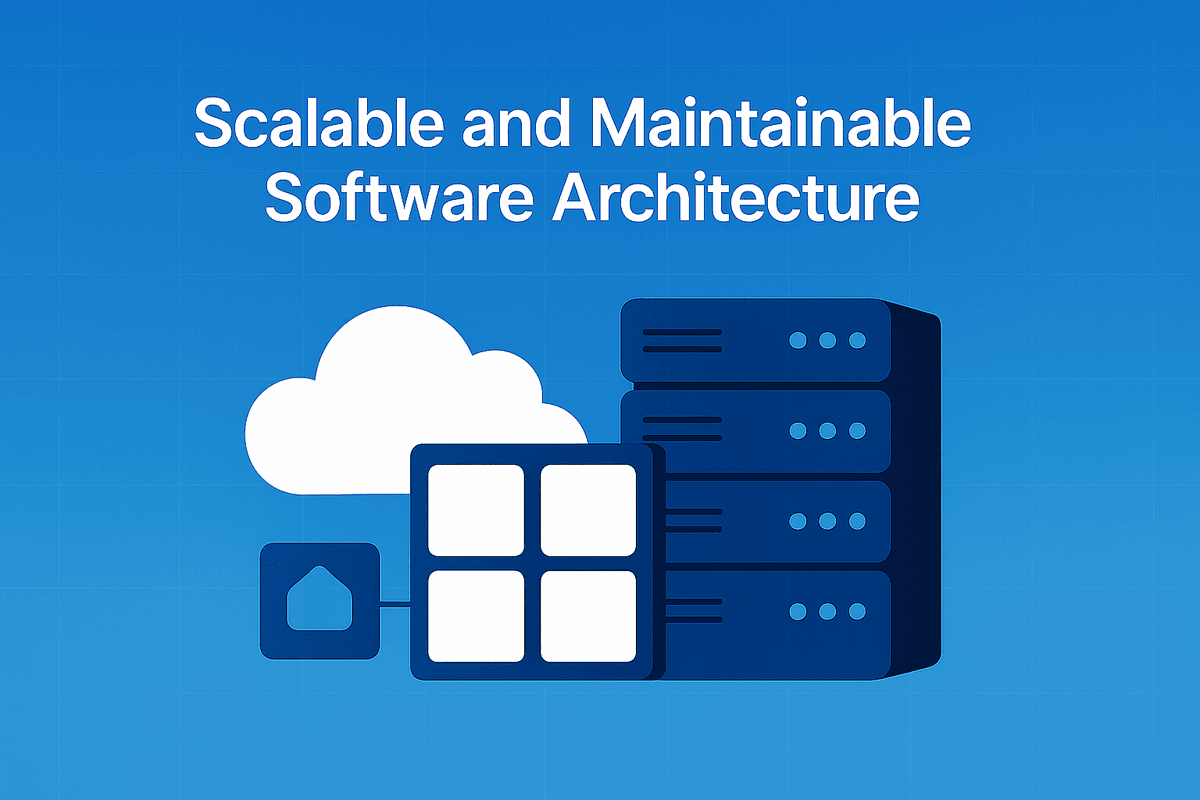
In the world of software development, producing solutions that only meet today's needs is not enough. Long-term success lies in a system's flexibility to adapt to evolving business requirements and increasing user demands. Therefore, designing scalable and maintainable software architecture is the cornerstone of every successful software project.
At Detartech, through the experience we have gained from projects across different industries, we provide our clients with long-term and flexible architectural solutions for their projects. In this article, we share the key strategies for building solid software architecture.
How Should You Start the Architecture?
Start Simple, Think Modular. Avoiding unnecessary complexity at the initial design stages is essential for building a sustainable structure in the long run. Modular software architecture divides the system into small, independent components. This allows each module to be developed, tested, and updated independently when necessary. Loose coupling system designs minimize the impact of changes on other modules throughout the system.
Plan for the Future at the Beginning of the Project. In sustainable software development, it is critically important to understand not only the current requirements but also the client's product vision and future growth plans. As the project grows, adding new features to the system should be easy. Therefore, planning a modular structure with expansion potential reduces possible restructuring costs in the future.
Apply Layered and Clean Architecture. Layered architecture helps keep the system understandable and manageable. Clear separations such as the presentation layer, business logic layer, and data access layer make code maintenance and scalability easier. In large and complex projects, the Domain Driven Design (DDD) approach helps clarify business rules and system boundaries.
How Does the System Scale as It Grows?
Use Microservices and Service-Oriented Approaches at the Right Time. Microservices architecture allows each part of the system to scale independently. Teams can work independently, and each service can be updated and deployed separately. However, microservices are not always necessary. Depending on the project and team maturity, starting with a well-structured monolithic architecture and transitioning to services later may be more efficient.
Build a Horizontally Scalable Architecture. Horizontal scalability ensures that the system maintains performance under increasing loads. Stateless services, load balancing, auto-scaling, and cloud-based solutions (AWS, Azure, GCP) are essential components of modern systems. Container orchestration tools like Kubernetes and message queues (Kafka, RabbitMQ) are also parts of this structure.
How Does Software Stay Maintainable in the Long Run?
Do Not Neglect Code Quality and Standards. The foundation of sustainable systems lies in clean code and adherence to standards. Following SOLID principles, using descriptive naming, writing readable code that minimizes the need for comments, and avoiding code repetition (DRY principle) should be prioritized. Shared code standards help new developers integrate into the system quickly.
Integrate Test Automation and CI/CD Processes Early. Successful projects should have a well-established testing culture. Unit tests, integration tests, and end-to-end tests, together with CI/CD processes, ensure that potential issues are detected early. Automated testing processes support the stable growth of the project over the long term.
Implement Monitoring, Observability, and Performance Tracking. Once the system goes live, performance monitoring, logging, and error tracking systems should be activated. User behavior analysis, performance bottleneck detection, and system stability measurements should be carried out regularly. This allows for proactive interventions before problems escalate.
The Right Technology Choice Pays Off in the Long Run. Technology selection affects both the current and future success of the project. Go and Rust can be preferred for performance-focused projects; Node.js and Python for rapid development; .NET and Java for enterprise projects; Laravel and Django for manageable web panels; and Flutter and React Native for mobile applications. Technologies with active communities and long-term support should always be prioritized.
Strengthen Team Culture and Process Management. Behind successful projects lies not only good code but also strong team culture. Code reviews, knowledge sharing, transparent communication, and agile project management (Agile, Scrum) practices enhance team motivation and software quality.
Conclusion: Strong Foundations Secure the Future
Software architecture does not need to be perfect from day one. However, starting with the right architectural principles ensures the sustainability of growing and evolving projects. At Detartech, we focus on deeply understanding our clients' visions, building flexible software systems that can adapt to change, and creating long-term added value.
Software systems built on solid foundations secure not only today but also tomorrow.
When implementing these kinds of architectural decisions, our backend scaling and web development services can help, and our CTO as a Service advisory covers higher-level technology decisions. We wrote about our own recent migration in our Next.js 16 Migration Guide.
Frequently Asked Questions
How do you design a scalable software architecture? By avoiding unnecessary complexity and starting with a modular, loosely coupled structure, separating the presentation, business logic and data access layers, and accounting for the client's growth plans at the start of the project. As load grows, a horizontally scalable setup is built with stateless services, load balancing and auto-scaling.
Does every project need a microservices architecture? No. Depending on the project and team maturity, starting with a well-structured monolithic architecture and splitting it into services when the time comes may be more efficient.
What is horizontal scalability? It is the system's ability to maintain performance under increasing loads. It is achieved with stateless services, load balancing, auto-scaling, cloud-based solutions, container orchestration tools such as Kubernetes and message queues such as Kafka and RabbitMQ.
What keeps software maintainable in the long run? Clean code and shared standards that follow the SOLID and DRY principles, unit, integration and end-to-end tests introduced early with CI/CD, performance monitoring and logging in production, technologies with active communities, and strong team practices such as code reviews.
Related Services
Related Technologies